- REVIEWS
Displays Electronics 
Speakers Sources Other Gear Software - HOW TO
How To Buy How To Use Tech 101

Energy Veritas V-5.1 Speaker System Page 2
Crisp, Detailed, Up Front
Salt propels Angelina Jolie through an unpredictable spy scenario that bristles with defectors, assassinations, and betrayals. The Veritas system made a first impression that never wavered, with a strongly outlined midrange and well-developed highs. The presentation was crisp, not relaxed; detailed, not reticent. Male and female vocals both localized in the sub, although the effect was minimal enough to be acceptable and didn’t recur in the other movies. In complex high-volume scenes, the soundfield kept its shape, although the loudest moments could induce fatigue.
Case 39 casts Renée Zellweger as a social worker who gets too close for comfort to an odd little girl whose intimates tend to come to sticky ends. Much of the dialogue is delivered sotto voce, allowing the V-5.2-C center to strut its low-level resolution. Moving off axis did virtually nothing to displace or diminish the center vocal image—in that respect, the system excelled. Although the soundtrack had reasonably wide dynamics, its loudest moments tended to be sudden and brief, so fatigue wasn’t an issue this time.
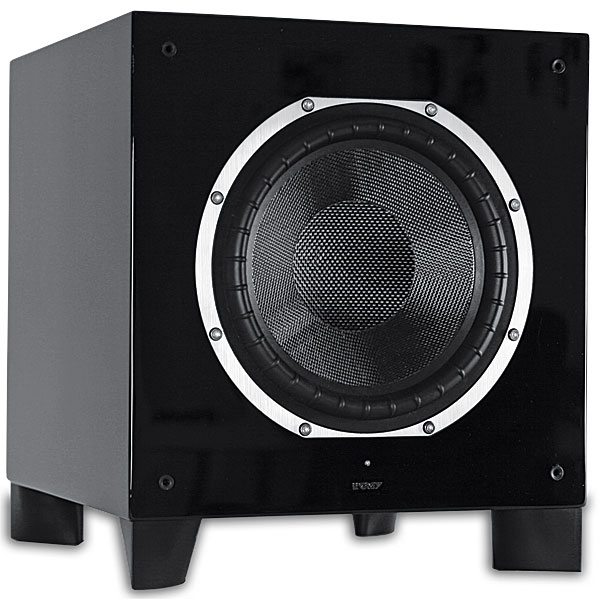
The A-Team is a remake of the popular TV series with Liam Neeson taking over the George Peppard role and Quinton “Rampage” Jackson standing in for Mr. T. Although it’s predictably bombastic—bristling with explosions, gunplay, and aerial combat—the movie was mastered at a uniform level with a relatively narrow dynamic envelope, much like the TV series on which it was based. This made it easy to catch all of the dialogue without wilting under the effects. At no point did the surround effects distract me from the main onscreen action. When they were switched into their bipole mode, the V-S surrounds rarely caught my attention except when especially strong effects made sudden lunges from front to back. The remainder of the time, they provided subtle surround reinforcement, as bipole/dipoles generally do. Their reluctance to noticeably localize effects gave me greater freedom of movement on the sofa: I could sit pretty near the left surround speaker without being distracted by it, even when the soundfield was fairly busy.
In the Club, at the Proms
Jeff Beck: Performing This Week...Live at Ronnie Scott’s is a rare music demo on Blu-ray with DTS-HD Master Audio. The guitar had plenty of bite without getting overtly strident. These speakers served Beck’s varied voicings well. The drummer wasn’t as lucky: The front speakers seemed to favor cymbals over drums to the point where I felt the presentation had become unbalanced, so I notched up the sub’s volume control from 33 per-
cent, my default setting, to just under 50 percent. This let me hear more of the drums and also gave the bass guitar a much-needed lift. The surrounds—maintaining consistency with the movie demos—didn’t distract attention from the stage.
Lang Lang is a frequent visitor to my listening room. I’ve seen him live twice, and he did not disappoint. He performed Rachmaninoff’s Piano Concerto No. 3 live at Royal Albert Hall, during the BBC Proms, with Yuri Temirkanov and the St. Petersburg Philharmonic. This 2002 Telarc CD came through with more of an edge to the strings than I’m accustomed to hearing from Telarc recordings. It was also airier, which helped. Even after the bass hike in the preceding selection, the piano still felt light on the left-hand side of the keyboard. However, even without any change in settings, the piano sound gained solidity and depth in a set of Scriabin Etudes on the same disc—recorded without orchestra at a different venue.

Monk’s Dream by the Thelonious Monk Quartet was the first album the great pianist and composer made for Columbia Records in the early 1960s. The CD is typical of early stereo recordings, with drums at left, piano at right, and plenty of room left in the center for the tenor sax and bass. When I switched between the Dolby Pro Logic II Music mode and stereo, it revealed surprisingly little difference. Whether the center speaker or just the left and right speakers alone deliv- ered the tenor sax, it retained the same light, supple tone that’s characteristic of Charlie Rouse. In fact, the basic stereo pair did so well, the instrument sounded as though the center speaker were running (except when I moved off axis). On a few selections, the sax got a little edgy. The speakers revealed some subtle distortion embedded in the recording—as if, perhaps, the sax had gotten too close to the microphone. These speakers aren’t forgiving, but they can make fine distinctions and had resolution to spare.
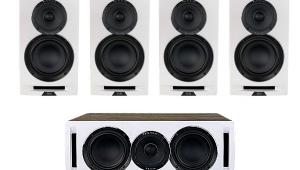
This latest iteration of the Energy Veritas retains the uncompromising personality of the line. Performance is content-dependent: Although their finishes are lustrous and lovely, these speakers make no attempt to varnish the truth. If I were going to live with them, I’d mate them with electronics voiced for warmth. Indeed, I can easily imagine the monitors running off one of the numerous cheap tube amps that have been enlivening the two-channel domain, perhaps for near-field desktop use. If I saw these speakers first thing every morning when I crawl from my bed to my desk, the day would always get off to a good start.
| |||||||||||

| |
| |||||||||


































| Displays Electronics Speakers | |
Sources Other Gear Software | |
Top Picks of the Year Top Picks | |
Custom Install How To Buy How To Use | |
Tech 101
|
|
Latest News Features Blogs | |
Resources Subscriptions |
WHERE TECHNOLOGY BECOMES ENTERTAINMENT
 © 2026 Sound&Vision
AVTech Media Americas Inc., USA
All rights reserved