- REVIEWS
Displays Electronics 
Speakers Sources Other Gear Software - HOW TO
How To Buy How To Use Tech 101

The New TV Tech Page 2
It’s unclear whether consumers will have to contend with multiple HDR sources that may or may not be compatible with their TV. In the meantime, the Consumer Electronics Association has defined a minimum set of attributes for an HDR-compatible UHDTV, which reads as follows:
• Includes at least one interface that supports HDR signaling as defined in CEA-861-F, as extended by CEA-861.3.
• Receives and processes static HDR metadata compliant with CEA-861.3 for uncompressed video.
• Receives and processes HDR10 Media Profile from IP, HDMI, or other video delivery sources. Additionally, other media profiles may be supported.
• Applies an appropriate Electro-Optical Transfer Function (EOTF) before rendering the image.
These guidelines, while vague and indeed somewhat inscrutable, are meant to give consumers at least some level of assurance that a TV labeled as HDR compatible will actually have some minimum degree of HDR compatibility.
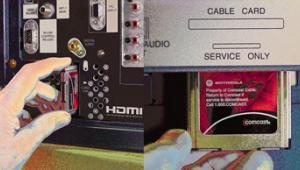
The first bullet point in the above list concerns the version of the HDMI interface included on Ultra HDTVs. Virtually all new UHDTVs that shipped in 2015 provide an HDMI 2.0 interface. However, external sources such as the forthcoming UHD Blu-ray players require an HDMI 2.0a link to trans- mit HDR-encoded content to the TV over HDMI (onboard streaming platforms are another matter). Manufacturers including Samsung, Sony, and LG have all announced that they will be making a firmware update available for their HDR-compatible UHDTVs that will allow them to upgrade to HDMI 2.0a. (Only one company, LG, has stated that one of their UHDTV lines—the EG9600 series OLED models—won’t be upgradable to HDMI 2.0a.)
But while the HDMI interface version could prove to be an impediment for certain UHDTVs to receive HDR, the same issue doesn’t apply to streaming services. The LG EG9600 models will still be capable of displaying HDR content from Amazon (at least) via their internal smart TV streamers. Netflix and Vudu have also announced that they will be making a limited amount of HDR content available to subscribers—at this writing, Vudu has announced that 18 HDR-encoded movie titles will be available with Dolby Vision encoding to help launch Vizio’s Reference series TVs. Amazon got the early jump on the competition by making two shows available in HDR for Amazon Prime subscribers using compliant TVs: the full Mozart in the Jungle series and the pilot for Red Oaks. So if a UHDTV is HDR-capable, it should be able to display HDR content from one or all of those services regardless of the version of its HDMI inputs.
How Awesome Is OLED?
One of the most impressive advancements in
TV tech over the past few years has been the introduction of OLED screens, for both HD and Ultra HD sets. OLED technology differs from LCD technology in that the pixels in an OLED TV are self-illuminating; there’s no backlight required. What’s more, the pixels can shut off completely to create absolute black. This gives OLED a distinct advantage over LCD, where the backlight always results in some degree of light leakage that has the effect of reducing contrast. OLED TVs, on the other hand, provide infinite contrast, and they’re free of the screen-uniformity and off-axis viewing issues that plague most LCD TVs.
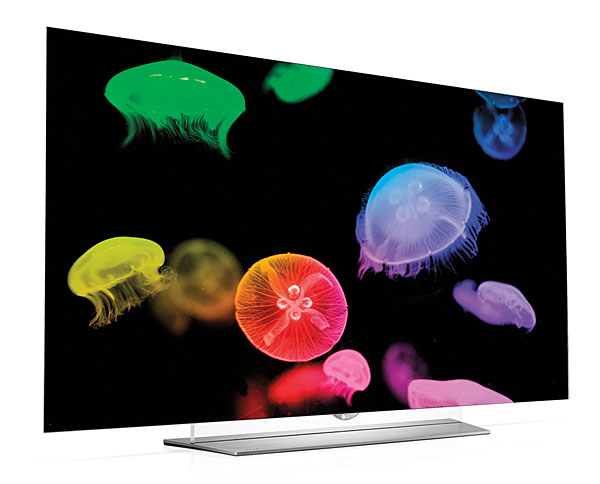
At present, only LG is selling OLED TVs in the U.S. (Panasonic recently unveiled a 65-inch model, but pricing and availability are announced for Europe only.) Their current (and recently expanded) lineup includes models with both curved and flat screens, starting at $1,800 for a 55-inch, 1080p model up to $25,000 for a 77-incher Ultra HD model. UHDTVs in the popular 55- and 65-inch sizes recently underwent volume-driven price cuts that brought them into the range of $3,000 to $5,000—a reasonable premium that LG hopes will drive OLED into the mass market.
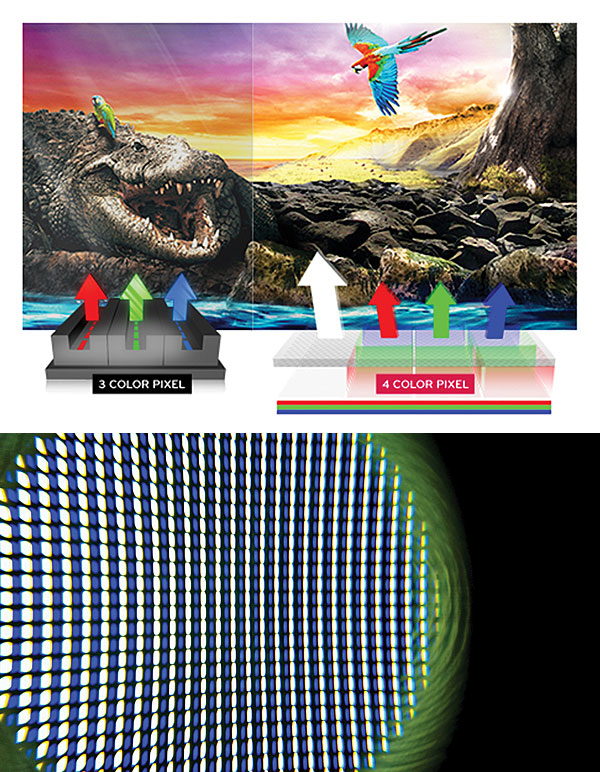
Both the curved and flat versions of LG’s OLED Ultra HDTVs support HDR, but as mentioned above, the HDMI ports on the EG9600 models are HDMI 2.0 and can’t upgraded to version 2.0a.; only the EG9700 curved-screen and EF9500 flat-screen sets are compatible with both internally streamed and external HDMI sources. Another thing to consider: Despite being HDR-compatible, LG’s current OLED sets are apparently capable of only half the peak brightness levels that LED-backlit LCD sets (such as Samsung’s flagship JS9500 models) can achieve. This could make them less capable of delivering on the promise of HDR once a sufficient amount of content becomes available for experts to make informed comparisons. However, the fact that OLEDs are capable of “infinite contrast” and can measure their overall dynamic range from a lower floor for black level means they still may be capable of displaying images that can be considered sufficiently HDR—once a detailed set of minimum specifications for that content is ultimately issued.
Here’s What You Should Buy
I wish it was that easy! Unfortunately, there isn’t any simple, formulaic advice we can give during this transitional period for TV. The picture-quality enhancements promised by High Dynamic
Range are considerable, so any new set you’re considering as your long-term, primary television solution should be HDR compatible. That said, it’s impossible to predict right now if one HDR format will end up being dominant, or if all the displays and sources going forward will support the full range of proprietary HDR formats from Dolby, Technicolor, Philips, and whoever else decides
to throw their hat into the ring. At least you’ll
know that any HDR-compatible TV you buy will
be capable of supporting 10-bit color from forthcoming UHD Blu-rays and various stream-
ing sources.
There’s no harm in buying a curved screen, but in most cases, it provides no picture-quality benefit over flat-screen models, and it may also cost more. As for OLED, that technology can offer a substantial picture-quality benefit over LCD, so it’s well worth checking out. LG’s OLED models have recently seen dramatic price drops. In some cases, you may find minimal price difference between an OLED model and a high-end LCD with the same screen size. So if you’re interested in OLED, now may be the perfect time to bite.
Then again, you could always go for a budget 1080p set for now and wait for things to settle out on the UHD/HDR front. The choices are yours to make—as long as you’re knowledgable and equipped to make them.
| |||||||||
|

| ||||||||







































| Displays Electronics Speakers | |
Sources Other Gear Software | |
Top Picks of the Year Top Picks | |
Custom Install How To Buy How To Use | |
Tech 101
|
|
Latest News Features Blogs | |
Resources Subscriptions |
WHERE TECHNOLOGY BECOMES ENTERTAINMENT
 © 2026 Sound&Vision
AVTech Media Americas Inc., USA
All rights reserved