- REVIEWS
Displays Electronics 
Speakers Sources Other Gear Software - HOW TO
How To Buy How To Use Tech 101

John Wick Creator Derek Kolstad on Matching Sound Design With Extremely Intense Light and Dark Visuals in His Latest Action Series, Normal
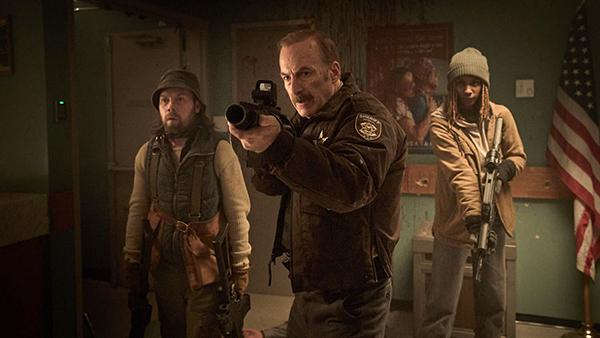
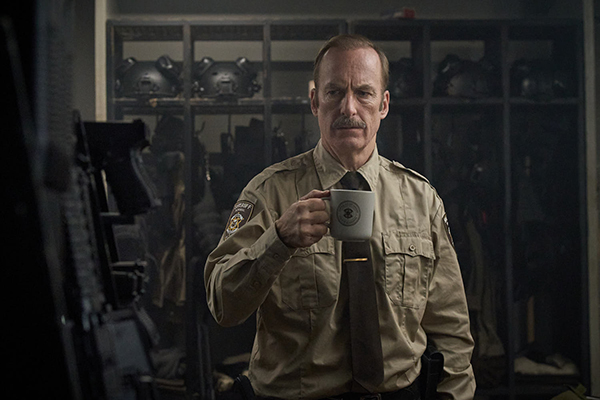
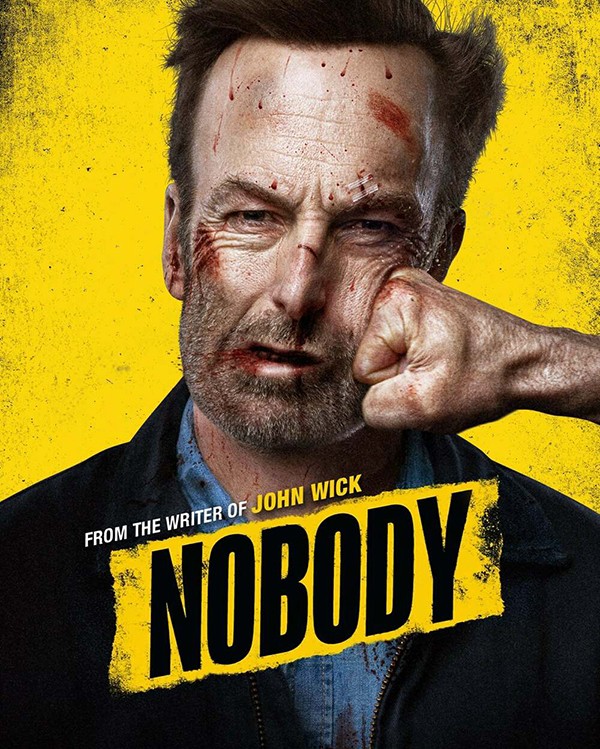
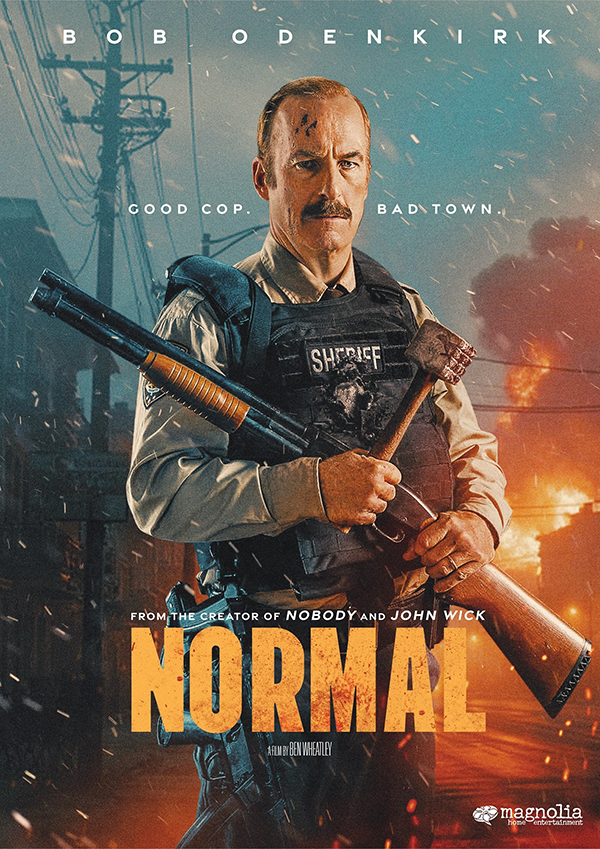
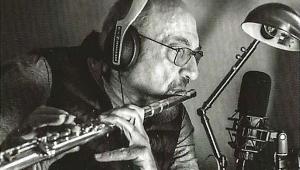
Derek Kolstad is the current undisputed king of the action film. Creator of the pulse-pummeling John Wick franchise (five installments and counting on 1080p BD and/or 4K UltraHD), in recent years, he’s shepherded, co-produced, and written a pair of new action film series starring Better Call Saul’s Emmy-nominated lead Bob Odenkirk (seen above): Nobody (two installments on 4K UltraHD to date) and their latest collaboration, Normal.
Normal is a 92-minute dark-comedy treatise on a small Midwestern town’s secrets, lies, and penchant for bloodshed that was just released yesterday, July 14, 2026, on 1080p Blu-ray via Magnolia Home Entertainment. The Normal BD sports an SRP of $29.98 (the DVD is $26.98), and it can be purchased pretty much anywhere that physical media is available these days.
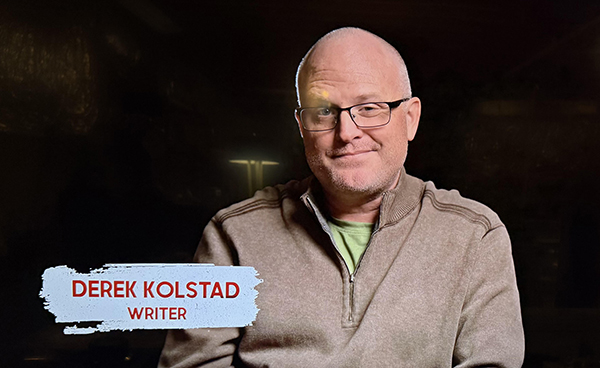
Where did his sense of creating visual-storytelling tension come from? “A lot of it came about from when I was a little kid,” Kolstad (seen above) told me. “I’m 52, and I watched my grandparents’ movies, my parents’ movies — all that kind of stuff — and one of my favorite actors was Spencer Tracy. Bad Day at Black Rock, right?” Kolstad is referencing the 1955 neo-western crime drama directed by John Sturges here, but what he follows it with is the kicker: “And then you couple that with The Twilight Zone, and ultimately, that’s how this whole thing snowballed into existence. What I love about The Twilight Zone is that what you get at the end of an episode is not necessarily a twist. It’s just a really well-done reveal — and that’s what we try to build into what we do.” (“Time Enough at Last,” indeed.)
In a wide-ranging interview on Zoom that we conducted a week ago today, Kolstad and I discussed how his team color-balanced Normal’s dark and light elements, how to make the right volume-level choices in the sound design and pick the best songs for major action sequences, and who would win in a fight between John Wick and Bob Odenkirk’s characters in Nobody and Normal.
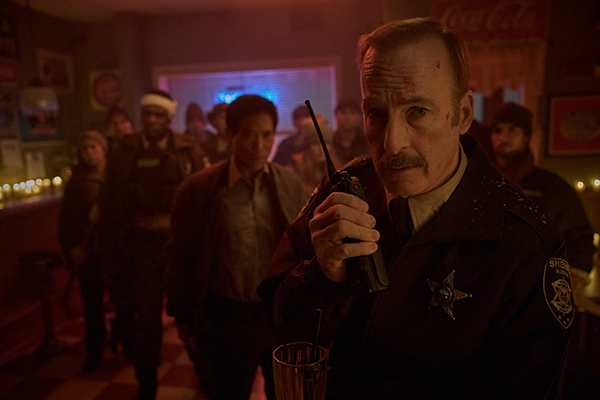
Mike Mettler: Let’s start with the visual side of things. Normal has some very dark scenes. And I mean dark as not just thematically dark, but visually dark scenes — like right at the very beginning in we’ll just call the “fingers” scene, so as not to spoil it. Then, when you change course and go outside in Minnesota by way of Winnipeg [where the movie was mainly shot], there’s a lot of white in the color palette with all the snow, the blizzard, and other things. In your producer role, are you conscious of what might be “too dark” when we switch from dark to light in the immediate next cut? Are you that involved in all the layers of color-correction choices?
Derek Kolstad: A lot of times, especially on this one with Ben [Wheatley, the film’s director] — Ben has the deepest knowledge of film I’ve ever known. A lot of times, he’ll be looking at the scene, and we just start talking about different scenes in different movies that have nothing to do with the scene we’re shooting. But then you begin to realize what we’re talking about is what that image looked like. In his mind’s eye, he knows what he’s gonna shoot. The guy’s a genius.
There were a number of times where, for instance, that opening scene — the “fingers” scene — that wasn’t in the original draft. It came in down the line because we wanted to have a scene to show people, “Hey, there’s gonna be stakes, but we’re all gonna have fun here.”
Mettler: Especially with the — well, I’ll call it that one “sneaky” finger moment.
Kolstad: (laughs) Ahhh, I love that guy! I remember after the first week of shooting, Ben called me and he’s like, “Derek, we’re 15% darker.” And I knew what he meant, both tonally and visually. So, I went through the script with him and took out a couple little quips here and there, and he just leaned into it.
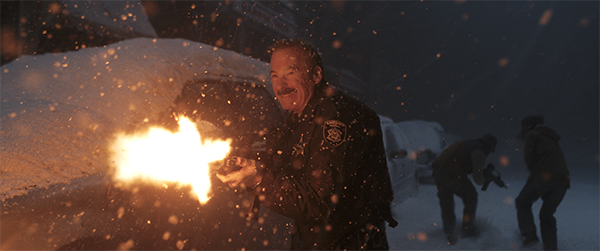
Kolstad: What I like about the way he shoots dark is that you can still see what’s going on. We’ve all seen movies where it’s so dark that you’re like, “I have no idea what’s going on.” He still has the “ballet,” you know?
When we were traveling with the movie and showing it at various locales, Ben would always watch it with the theater peeps before showing it, because no venue is the same. There are always peaks and valleys when it comes to doing those little tweaks, but Ben — the guy really cared, and I respect the hell out of him for that.
Mettler: I think it really shows. In all of the films that you’re writing and producing, viewers have to pay really close attention to those little throwaways early on, because something always shows up later. In Normal, for example, there’s something about pie with Sheriff Ulysses, Bob [Odenkirk’s] character when he’s in the bar/restaurant. Then he mentions all the shotguns racked on the wall to Ernie [Dan De Jaeger] and says something like, “Any of them loaded?” And Ernie’s like, “Wouldn’t be much fun if they weren’t, would it?” So, knowing how you write, we kinda already have an idea there’s gonna be something “fun” coming with those guns later. I’m not spoiling it for people who haven’t seen it yet, but it comes toward the end where one of the shotguns falls off the wall, and then it goes off — and that’s the kickoff of one hell of an amazing action sequence.
Kolstad: (chuckling) Yes!
Mettler: And, in pretty much every film you do, whether it’s in the John Wick films or the Nobody series, you have to coordinate those scenes almost like they’re a sketch or a dance, kind of like the ballet you mentioned earlier. But now, I wanna throw music and the sound design into the mix. How do you guys figure out the right songs to use, and the right tone for them?
Kolstad: Well, I would say it’s the genius of our music guys — but also [director] Ben Wheatley, who comes in with any number of things. The other difficult thing is — you know, writing is one thing. It has its own difficult nature. The thing about producing that I’m learning more and more, especially when it comes to music, is what certain songs cost.
There are songs I really like that other people might not have heard of, but when you ask about getting them you’re like, “You want $300,000 for that? We don’t have that kind of budget.” (MM laughs)
Ultimately, the songs that came into play in Normal — they just work so well. They just sing on their own, you know?
Mettler: Yeah, yeah. Well, I love that you have a band actually called Blood Sabbath singing “Paranoid,” which opens the whole thing at the beginning — and it’s fantastic. When you hear it coming in, you’re like, “Is that guy actually trying to sing like Ozzy [Osbourne]?”
Kolstad: (laughs heartily) I love that song!
Mettler: On another audio-related thing in Normal, I’m also curious about the jukebox that plays into an important part of a certain sequence later in the film. We’re actually seeing 45s move into play on it. Did you help choose them?
Kolstad: No, but at the same time, one of the things that Ben and I talked a great deal about was making sure that you hear the sounds that you don’t often hear in a movie. Like, I love the sound of a jukebox — the clicking, the whirring, the sound of the arm that’s in dire need of grease; all that kinda stuff. It’s that long pause between songs that is really the match being led to the wick.
The other thing I love about a good song in a movie is — and I still remember, what was it, KC and The Sunshine Band, where they used them in the first Kingsman, but they sped it up a little bit. I thought that was genius! [2014’s Kingsman: The Secret Service deftly uses KC&TSB’s 1983 single “Give It Up” in a pivotal scene triggered by Samuel L. Jackson’s character, Richmond Valentine.]
And then you go all the way back to [1992’s] Reservoir Dogs with “Stuck in the Middle With You” [by Stealers Wheel]. That was like, “Ahhhh.”
Mettler: That’s exactly it. After you’ve seen that scene the first time, the tension that builds when you rewatch it — because you know what’s coming — it’s like a blood ballet. It’s orchestrated in such a way that you’re waiting for that tension moment. (Kolstad nods)
Mettler: Getting back to Normal and the jukebox scene, you hear it whir and you’re seeing the next 45 come into play, and we know something else is going to happen there — but it also has to be the “right” musical cue too. For this scene, you’ve got “When You’re in Love with a Beautiful Woman” by Dr. Hook playing. What a hell of a choice! Did you call that one, Derek? [It was a hit single for the band from New Jersey that reached #6 on the Billboard Hot 100 chart in 1979.]
Kolstad: I’m a musical moron, dude! (laughs) A lot of times in the screenplay I’ll say, “Hey, it’s like this song, but I know full well we can’t afford this song,” you know?
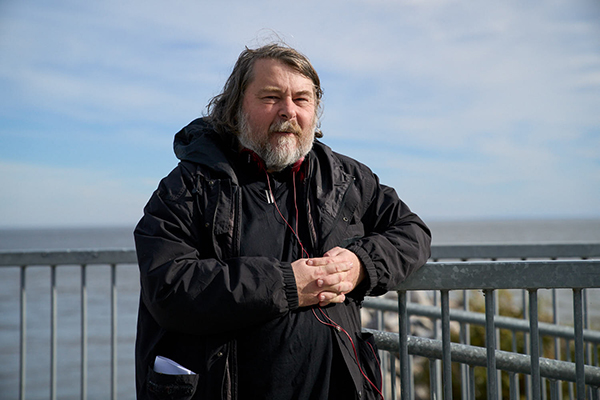
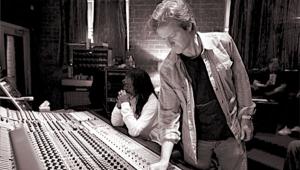
But the 45 that plays in the restaurant there at the end — when we were going through songs, it was Ben [Wheatley; shown below] who perked up, going, “That’s my mom’s favorite song!” So, he got to put his mom’s favorite song over one hell of a bloodbath!
Mettler: I’m sure that, if she’s still with us, she must have loved that! Well, even if you’re not a music nerd, do you have an idea like, “Someday, I’m gonna get this song for one of my movies”? Do you have one banked that you’re like, “You know what? We’re gonna spend 300K, damn it, on this one. I’m getting it." Come on, Derek — you’re making a couple of bucks here now; you can afford it! (laughs)
Kolstad: (laughs) Well, it’s funny, because there are so many albums I go back to. Like, I’m a huge techno and trance fan. I’m a huge fan of The Chemical Brothers and Prodigy from back in the day.
At the same time, I love Esquivel, and I love Getz/Gilberto. They do stuff that’s so ahead of their time. Sometimes, Esquivel especially has songs that are irritating as sh--, but you love them — and then, other times, you’re like, “How did he make this song?”
A lot of times, there are those songs people hear and they’re like, “I swear I know this one” — especially with Getz/Gilberto — but they haven’t been used yet in the right way. I love what the best filmmakers do by taking a slow song and putting it over a fast sequence. It just feels like the perfect kind of tango.
Mettler: Yeah, well, that’s the mix of — I mean, we’ll just use the title of Sound & Vision here. Together, it’s the perfect mix of how to do that. (Kolstad nods)
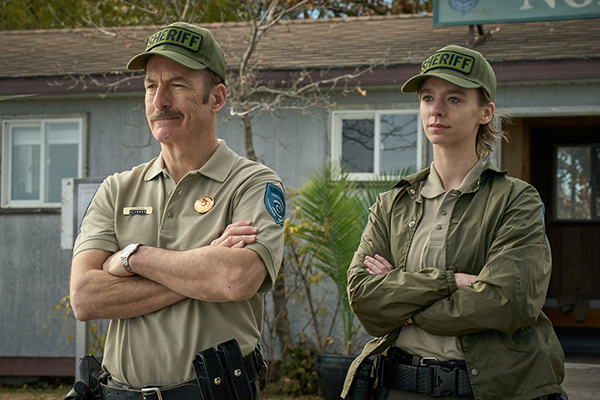
Mettler: It’s also key when you’re having loud noises and soft noises throughout a film. Like what you mentioned about the sound of the jukebox, the other sound that I liked from the very beginning of the film is the crackling leather jacket worn by deputy Mike [Billy MacLellan] in the police car.
Kolstad: (exclaims) Oh! I love that, man.
Mettler: As you’re watching that scene for the first time, you don’t know the dialogue that follows, where they actually talk about it. But when you hear that sound, any of us who have owned and worn those kinds of leather jackets, we’re like, “Are they amping that sound up?” Did your sound designers have to say, “Okay, is it too loud here? Do we really overplay it? Did we get it right?” Me, I think they found the right balance.
Kolstad: Well, it’s hard. Sound is a different creature altogether. I remember years ago, whatever anniversary it was for when Halloween came out — for the first one [from 1978] — and they showed this classic sequence where she [Annie Brackett, played by Nancy Kyes] is walking down the sidewalk and Michael Myers just steps up behind her, and then steps back. First, they played it without sound, and it’s the most boring long scene ever. But then they played it with the music, and your hackles are up even though you know the movie.
So, with our sound design — and, again, massive props to the team, but also to Ben who watched this movie 1,000 times and still chuckles at stuff. But especially with the jacket — you don’t wanna go too high, or you don’t wanna go too low. It took forever to balance it, but he did.
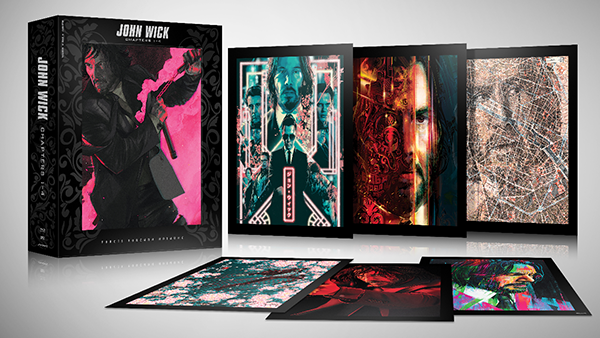
Mettler: He sure did, because we got the payoff with it — and more than once too. Certainly, in that other series of yours that has that Wick character in it (both laugh), you guys set a visual tone that I’d say wasn’t done in that way before you did it. You guys literally created that, wouldn’t you agree?
Kolstad: Well, again, massive props to Chad [Stahelski] and Dave [Leitch] on that, because, leading up to it being the first movie they directed [2014’s John Wick], they had a non-physical little black book of ideas they’d built over the years — and, and they were really keen on that.
My grandpa’s name was John Wick, and he told me years ago that he took his family to go see a new Janet Leigh movie because he loved her, and it was [1960’s] Psycho. We used to talk all the time about how he saw it opening night, and how no one knew what that movie was about and no one expected the lead to die, right?
And he talked about the violin, or whatever it is that does the [mimics the sound of Bernard Hermann’s legendary Psycho shower scene score] ching, ching, ching. To this day, the number of times he would bring that up about this movie — he’s always like, “I loved that movie, and I hated that movie.” (laughs)
But that’s the thing about sound though, man. Go back to [1990’s] The Hunt for Red October, and part of the reason that movie works so well and is so re-watchable is the soundtrack, and the attention to the very tiny details — like the sound underwater. It’s awesome.
Mettler: It really is great, I agree. The other quick question I have about John Wick is, did your grandfather get points for you using his name for it? Did you actually have to pay him to use his name?
Kolstad: (laughs) You know what’s so funny? He had to actually sign a waiver-type thing. He signed a release. When the movie came out, Lionsgate suddenly realized that I have a couple of Uncle John Wicks, and I have a couple of cousin John Wicks — but my family and I are really close, so they’re just so excited about this thing.
Mettler: Well, I’m glad you all get along! Without giving anything away, is it fair to say that we’ll be getting a Normal sequel at some point?
Kolstad: Yeah, I hope so, man. I love this thing so much, as did Bob [Odenkirk] and Ben [Wheatley] and Marc [Provissierio, their other co-producer] — and I can’t wait to keep telling this guy’s story.
Mettler: I really hope you guys get to do that. And if you do continue with the series-naming theme, since we’ve already got Nobody and Normal, how about you call the third series you come up with for Bob to do Noble?
Kolstad: (laughs heartily) It’s so funny. Sonja, my wife, is my editor, and she’s like, “Which one is it?” The joke was, it’s gonna be Nowhere, and she’s like, “Don’t. No more N titles. We need something else.”
Mettler: As long as it starts with the “N” followed by the “o,” I think it’s fine to keep going that way. Well, I know we’re coming up on the time bell here, so I’ve got the last question that hopefully you can answer. Let’s put these three characters together for the final scene. You’ve got John Wick, you’ve got Hutch from Nobody, and you’ve got Ulysses from Normal facing off against each other. How does that go? Who wins?
Kolstad: (chuckles) Well, I think Ulysses would be first to go down — but his gun would go off and start something in motion. And I think John wouldn’t wanna fight, but Hutch would wanna fight. And just as we would get to the death kill . . . (slight pause) that chandelier drops on all three. I think it would be something like that — and I’d love to do that, man.




















































| Displays Electronics Speakers | |
Sources Other Gear Software | |
Top Picks of the Year Top Picks | |
Custom Install How To Buy How To Use | |
Tech 101
|
|
Latest News Features Blogs | |
Resources Subscriptions |
WHERE TECHNOLOGY BECOMES ENTERTAINMENT
 © 2026 Sound&Vision
AVTech Media Americas Inc., USA
All rights reserved