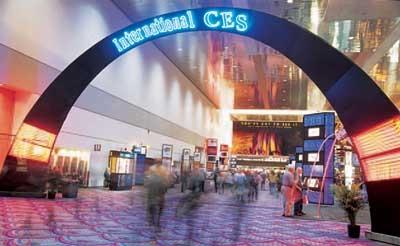
Fortunately, the saying "What happens in Vegas, stays in Vegas" doesn't apply to CES. The technology introduced there quickly spreads to the rest of the world. This year, audio companies were especially anxious to have the show's magic rub off on their wares.
Just ask anyone who's spent any amount of time watching a high-definition TV - it's addictive. Maybe it's the seductive picture or the cinemalike sound, but the half-dozen HDTV channels I had available until recently were about the only ones I regularly watched - even though there were hundreds of standard-definition channels I could have tuned in.
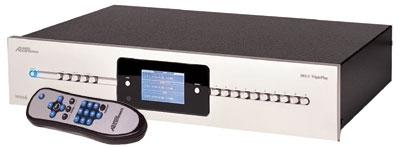
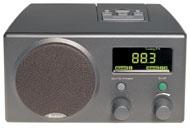
I'm hearing voices from outer space. Even stranger, I'm hearing different voices in different rooms. Susan Stamberg lectures me in the kitchen, Frank Sinatra croons at me in the bedroom, and Swollen Member is scratching in the den.
Almost overshadowing the rich out cropping of standard-definition DVD recorders at this year's CES was the looming presence of several prototype high-definition disc players and recorders. Many of the manufacturers backing one of the two high-def disc systems bitterly contending to become the new international standard were displaying their first go at a machine.
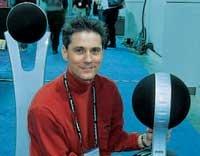
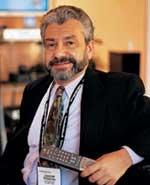
The longtime E Street Band guitarist and Sopranos heavy (hello, Silvio) meets ME in Las Vegas to discuss his Sirius satellite radio gig and why CDs are "the biggest fraud ever perpetrated on the public.
It wasn't long ago that you'd hear old-school audiophiles at CES bemoaning the disappearance of tubes - the vacuum tubes in audio gear, that is. But the latest technology to beat a quick retreat from the mega-electronics show is the picture tube, or CRT, used in traditional TVs.
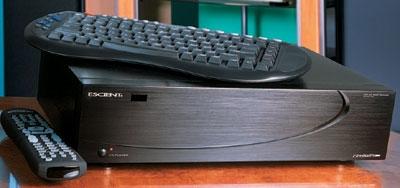
The FireBall DVDM-100 isn't a DVD player. It's not an AM/FM receiver or a power amplifier. In fact, without supporting equipment and an Internet connection, it's not good for much at all. But once it's connected, you may never want to go back to non-FireBall playback again.
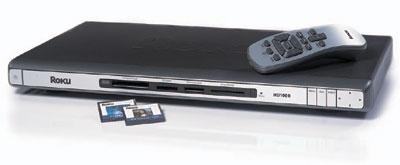
The mutual embrace of A/V and PC got considerably tighter at this year's CES, most visibly with the proliferation of devices that let you experience all kinds of music and video entertainment on your TV and stereo. And almost every one of these products could connect to some kind of wired or wireless network - yet another sign of how deeply the PC mindset has taken hold in the home.
Is convergence dead? Not the concept - the term. With the Consumer Electronics Show awash in TVs, components, and speakers full of computer technology, maybe it's time to just dump "convergence" and embrace ever-shrinking, ever-more-powerful chip sets as our home-entertainment destiny.
Picking the right home theater system can be a lot like picking the right horse at the track - especially if you're looking for a complete system in a single package. Manufacturers are flooding the market today with low-end home-theater-in-a-box (HTiB) systems that cheap out on the thrills and chills.
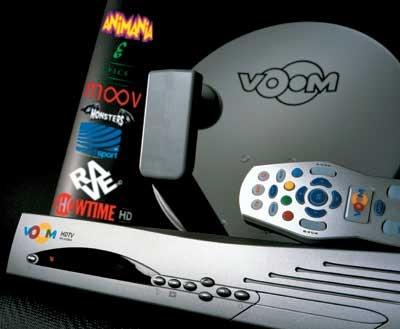
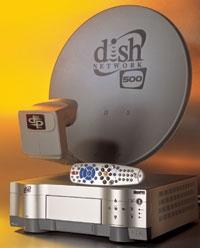
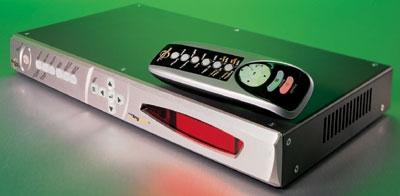
Every night has come down to an impossible choice. Do I revel in the convenience of my video hard-disk recorder (HDR) or exalt in the splendor of high-definition TV? Why can't a set-top box enable me to pause a premium HDTV movie as readily as an ad-glutted network newscast?
When digital still cameras were new and no match for conventional film photography, a typical TV had little trouble doubling as a "slide" projector. But analog TVs can't do justice to images produced by today's multimegapixel cameras.
There are two ways to go about setting up a home theater. The first option is to rope off a room in your house, seal the windows, and then make any and all necessary modifications to turn it into a dedicated movie palace. The second, more common option is to take a space your family actually lives, works, and plays in and adapt it so that it can easily go from sitting to screening room.