With such a storied lineage, I have to ask you: When did you first become interested in gear and electronics? Well, despite growing up in a family famous for the invention of the 8-track player, unfortunately, I was not filled in by any of my relatives on the mysterious world of electronics.
Have you ever looked at one of our speaker test reports and wondered what that funny-looking graph with the squiggly lines is for? Or have you ever thought about how the information conveyed by that graph relates to what a reviewer hears? Given the many, many new speaker systems that get produced each year, maybe you've wondered what methods we use to differentiate between them.
Newcomers to Sound & Vision's HDTV test reports are likely to come across some tech talk that might seem confusing or arcane at first. The truth is, video technology has become much more complex since TV started to go digital and high-def nearly a decade ago, and a side effect of all that increased picture resolution and clarity has been mounds of strange new jargon.
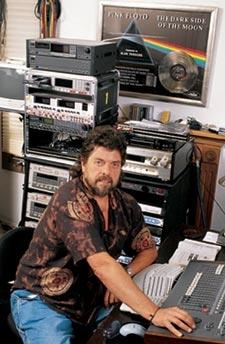
Photos by Ebet Roberts Walk into the home of Alan Parsons, nestled in the hills of Santa Barbara, and you'll see ample evidence of his illustrious career. There are so many gold and platinum records on the wall of the studio annex that they spill from the hallway and fill the kitchen.
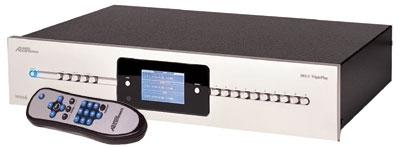
I'm hearing voices from outer space. Even stranger, I'm hearing different voices in different rooms. Susan Stamberg lectures me in the kitchen, Frank Sinatra croons at me in the bedroom, and Swollen Member is scratching in the den.
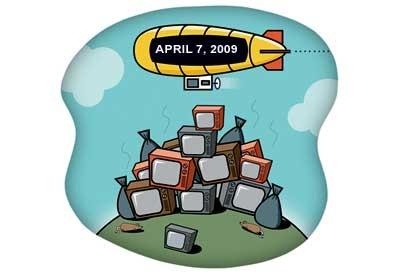
First, the good news: when you turn on your analog TV at 11:59 p.m. on April 6, 2009, you'll get pictures and sound. And now the bad news: at midnight and forever after, your TV will never receive a signal again.
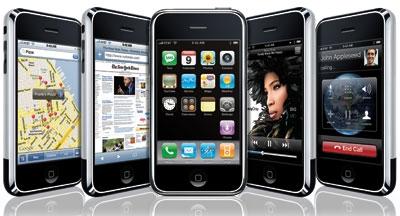
From the outset the most intriguing thing about the Apple iPhone hasn't been the phone so much as the interface: a high-resolution touchscreen on which your fingers do the talking: Tap an icon to select an application, spread them to enlarge the picture, slide your finger to move the cropped image into view, swipe the screen to reveal the next slide. It all feels so natural.
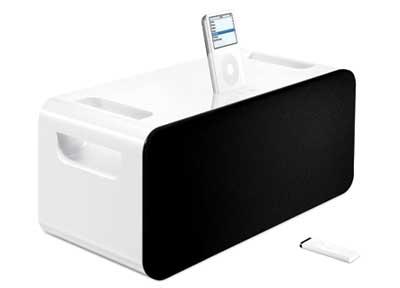
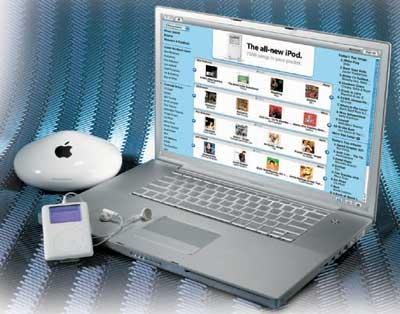
Apple's computers have always been audio- and video-friendly, but the company has mostly left the home entertainment part of the equation up to third-party developers. Although an Apple hard-disk video recorder or music server has seemed like an obvious thing for Steve Jobs to trot out, year after year there's been nothing but new (and very welcome) takes on the iPod.
Flash memory's time has come. Previously popular only in low-capacity MP3 players and digital cameras, the iPod nano seems destined to take this solid-state medium to a new level.
Running with a stack of my favorite CDs compressed into a player no larger than a deck of cards, I set a personal best on the trail around the Central Park Reservoir.
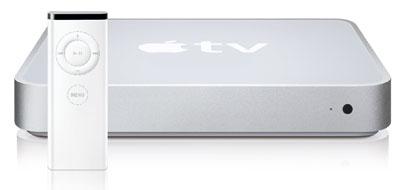
In the last 5 years, more than 50 companies have introduced home-network-ready receivers that connect your computer with your TV and audio system so you can stream music, TV shows, movies, and photos from the home office to your home theater. As place-shifting devices go, Apple TV - the slickest media receiver yet - is decidedly late to the game.
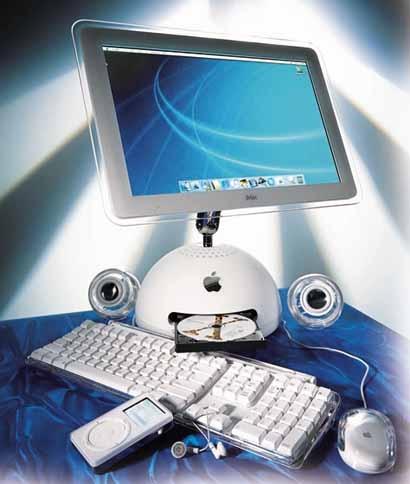
When Apple introduced its lower-priced line of iMacs in 1998, it made a big step toward its goal of getting Macintosh computers in the hands of a wider range of users. The line has undergone a number of changes since then, with new iMacs sporting everything from psychedelic candy-color cases to powerful built-in video editing capabilities.
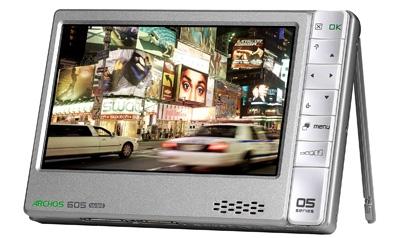
Portable media players with touchscreens have been captivating users ever since Apple's introduction this summer of the iPhone. No need to wonder why: Imagine all your music, videos, and photos stored in a device slim enough for your pocket and available for playback at, literally, the touch of a finger.