OTHER TECH

Sort By: Post DateTitle Publish Date
 |  May 02, 2006

Q. I was a printer for many years, and in our business we always worked with the primary colors of red, blue, and yellow to derive other colors. Why does the television industry use red, green, and blue as its primary colors? Jack Phillippe Yeadon, PA

 |  Oct 11, 2007

Q. For a home theater in my basement, I have a room that measures 16 feet wide by 27 feet long. I'd prefer to keep the space as a multipurpose room with the theater integrated in a way to keep the space open.

 |  Jan 03, 2007

Q. After reading your article "Why You Need Four Subwoofers" (November 2006), I felt adding a second subwoofer would probably be enough for my rec room. I just have two questions. First, should the second sub be the same size and power as my first sub, or is it better to have two different sizes?

 |  Dec 05, 2006

Q. I watched a special on Discovery Channel called "Home Theater Revolution," and the theater expert built a room for a family to watch movies. He put the surround speakers on the back wall, as opposed to on the side walls facing in.

Theo Kalomirakis  |  Jul 31, 2008

Hi Theo, There are things I wished I hadn't done with my home theater. For example, I shouldn't have spent so much on my receiver and should have waited for one with HDMI inputs and the new Dolby TrueHD and DTS-HD Master Audio formats. Also, I heard really good things about Sony's 1080p projectors, but was persuaded that a Runco 720p model would look better.

Theo Kalomirakis  |  Sep 14, 2008

Ten years ago, when home theater was just becoming the hot trend in new-home construction, I came up with an inexpensive, ready-to-assemble theater design for a large corporation in the housing-supplies business. Our target was the builder of homes for the average American family.

Theo Kalomirakis  |  Sep 15, 2008

Ten years ago, when home theater was just becoming the hot trend in new-home construction, I came up with an inexpensive, ready-to-assemble theater design for a large corporation in the housing-supplies business. Our target was the builder of homes for the average American family.

Theo Kalomirakis  |  Jul 27, 2008

Before I get to my first critique of reader's home theater, let's make sure we're all on the same page. This column is not going to be about electronics. There's plenty of that going on elsewhere on this site. Here I will be talking about the effort to integrate electronics into the look of a room dedicated to watching DVDs, Blu-ray Discs, or HDTV.

Theo Kalomirakis  |  Nov 03, 2008

With the attitude of someone who thinks he's seen it all, I visited the recent CEDIAExpo in Denver expecting to be neither pleasantly surprised nor particularly disappointed. Let's be real: When Blu-ray Disc delivers film-like picture plus audiophile sound, and a well-engineered home theater puts the local multiplex to shame, what else can impress a rabid movie buff like me?

Theo Kalomirakis  |  Mar 12, 2009

In terms of means and level of accomplishment, the two theaters featured this month couldn't be more different. One is the work of a professional custom installer for an apparently well-off client, and it actually involved the services of an architect.

Daniel Kumin  |  Nov 19, 2014
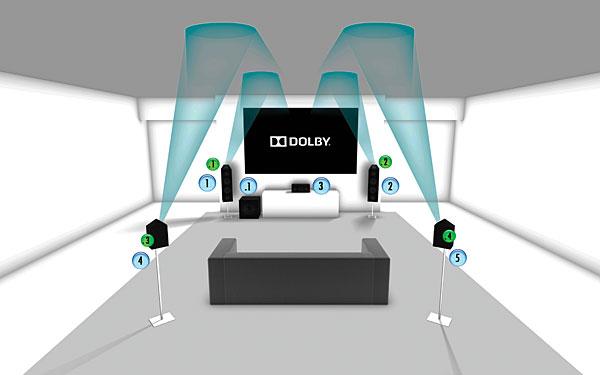
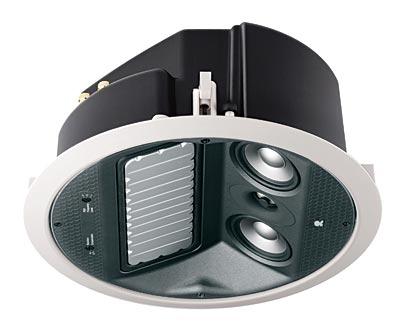
Dolby Atmos, the latest, “object-oriented” surround sound solution magicked up by the San Francisco technologists, has earned enough ink here and elsewhere that many of us are passingly familiar with it already. Briefly, then, object-oriented means that instead of panning discrete effects or overall mixes to left, center, right, or various surround channels, sound designers and producers can now direct sounds through a virtual listening space, letting the computer work out the details. Ultimately, of course, whether at the theater or at home, sounds still emanate from physical loudspeakers driven by physical amplifier channels, so there’s a certain amount of semantics at play here. But Atmos is scalable: A commercial theater can have as many as 64 discrete, individually addressable loudspeakers, including multiple “height” speakers in the ceiling.
John Sciacca  |  Mar 15, 2004

Fortunately, the saying "What happens in Vegas, stays in Vegas" doesn't apply to CES. The technology introduced there quickly spreads to the rest of the world. This year, audio companies were especially anxious to have the show's magic rub off on their wares.

John Sciacca  |  Nov 05, 2007

Audio Design Associates might be unfamiliar to Sound & Vision readers, but this 30-year-old, New York-based company has a well-earned reputation as a top player in the custom market. In fact, it pioneered bidirectional control in 1989. And ADA's president, Albert Langella, is the first-ever recipient of CEDIA's Lifetime Achievement Award.

Pages

X