- REVIEWS
Displays Electronics 
Speakers Sources Other Gear Software - HOW TO
How To Buy How To Use Tech 101

Analog Video Is Dead, Analog Audio Lives On. Why?
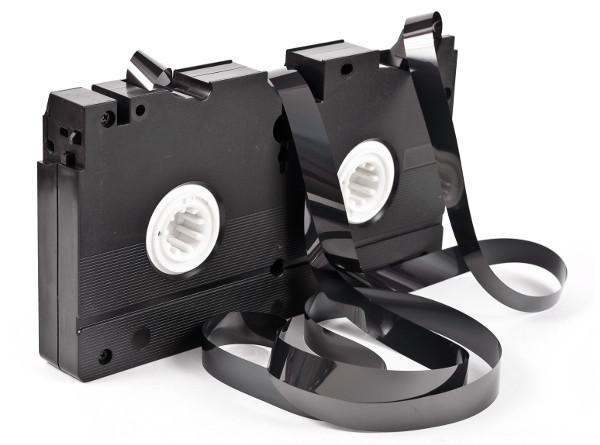
You may already know the story. Funai Electric, the sole remaining manufacturer of VHS machines, announced that it ceased production at the end of July (Betamax machines disappeared back in 2002). Funai produced over 750,000 units last year, but apparently their sales, not surprisingly, were eroding. Still, that’s a respectable sales figure; I suspect they were having difficulty sourcing subassemblies from their suppliers. If you stockpiled a few million video head drums in your basement, the parts manager at Funai may be eager to take your call. But, in reality, the era of VCRs with flashing 12:00s is coming to an end.
But a question remains: Why does analog audio flourish while analog video is now dead? Analog audio enthusiasts would certainly point to sound quality as the number-one reason why analog audio still thrives. In contrast, the argument might go, analog video’s quality was always lacking. But is that really the case? While analog video formats such as Betamax and VHS never provided spectacularly good quality, the analog picture quality of the Laserdisc format was very good, and yet it was easy for DVD to push it aside. If performance was the most important factor, and if analog signals possessed some magical property, Laserdisc might still be around.
A variation on the argument might be that analog audio has magical properties, while analog video does not. Hence the survival of one and the demise of the other. There might be some truth in that argument, but I think there’s more to the story.
The Laserdisc is gone because of the Compact Disc. Given the CD’s popularity, it was easy for DVD, with excellent sound and picture quality, to piggyback onto CD and displace Laserdisc. Consumer analog videotape is gone because the performance was never very good; in all fairness, though, professional analog video formats performed extremely well. So the problem wasn’t analog video per se, it was the fact that the low price points of consumer analog video recorders necessarily limited their performance, and low-cost digital video players could perform better. It’s also worth noting that tape is inherently a PITA, and digital video discs are infinitely more convenient. Clearly, for a multitude of reasons, analog tape was always destined to be short-lived.
Still, why does analog audio persist? Analog audio open-reel tapes are pretty much gone, as are audiocassettes. It is specifically the vinyl record that persists and thrives. And why is that? One reason, certainly, is a combination of the fact and myth of its sound quality. Another reason, I think, is the purity, the elegance of the format. The black disc is dramatic; you can look at its surface and see the loud and soft portions of the music. When a shaped diamond is placed in the groove, it is wonderful to see that music emerges from such a simple machine. In contrast, the tape cartridges, loading slots, spinning drums, and clunky mechanics of analog video is as unsexy as it gets. Except to the superbly talented engineers who invented helical-scan technology, there is nothing fascinating about it. A slowly rotating disc with an undulating stylus—that is sexy.
Somewhere, someone is shedding crocodile tears over the passing of the VCR. But it’s not me, or anyone I know. Still, the format deserves our respect. Put a record on your turntable, and play an analog song, in remembrance of our departed analog brother.

























































| Displays Electronics Speakers | |
Sources Other Gear Software | |
Top Picks of the Year Top Picks | |
Custom Install How To Buy How To Use | |
Tech 101
|
|
Latest News Features Blogs | |
Resources Subscriptions |
WHERE TECHNOLOGY BECOMES ENTERTAINMENT
 © 2026 Sound&Vision
AVTech Media Americas Inc., USA
All rights reserved