Steve Guttenberg has a question that's on the minds of many: Why do we have to traverse an endless string of trailers, FBI warnings, promos, and menus before we can start watching a DVD or Blu-ray?
It’s that time of year—when kids cringe and parents rejoice. The school bus armadas have begun. Little ones are heading back to school, but the whole family is heading back to the malls and online to load up on school supplies for the year. What tops the shopping list? Technology. What is the third most popular back-to-school technology purchase? Headphones. Bizarre, right?
How many times has this happened to you? You're in a movie theater or church, and cell phones keep ringing. The girl in seat 36C is surreptitiously talking on her cell phone as the flight takes off. Or, worst of all, you notice that the creepy guy...
Short version: bandwidth, budget, and better coverage from home.
For the last dozen years, CEDIA has been a fixed point on my calendar;a reset button for the custom‑install world and a reality check for what’s actually shipping versus what’s still a render. This year, I’m skipping it.
At least that appears to be the thinking at Atlantic Technology and Zvox, two New England-based companies that announced pre-holiday-season discounts this week.
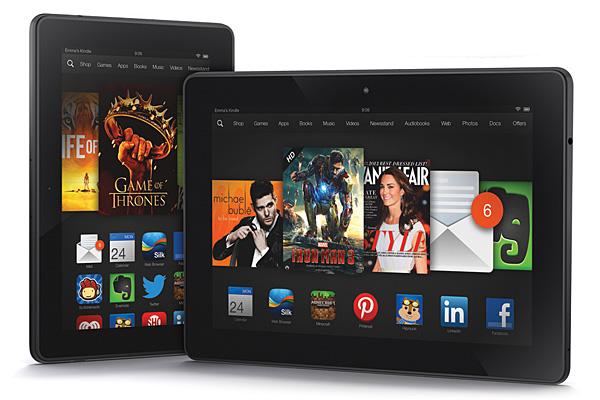
Why does the Kindle Fire HDX have that blue tint around the edges of the touchscreen? Amazon says it’s actually to improve overall color: “Most LCD displays use white LEDs, and then apply filters to extract the desired color. The result is oftentimes a compromise to tone and color accuracy, or—if attempting to address these compromises—an increase in battery consumption and, thus, device weight. We’ve taken a different approach. To achieve perfect color accuracy on the Kindle Fire HDX 7-inch at the lowest possible battery consumption and weight, we used blue, not white, LEDs. Blue LEDs allow for a much more accurate and rich representation of color and result in an up to 20 percent improvement in power efficiency.” Amazon was selling the device for $229 at press time.
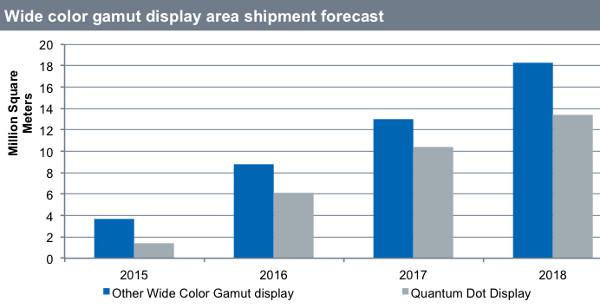
As competition in the display market intensifies, TV manufacturers are seeking new and emerging technologies to differentiate their offerings from competitors, which is leading to increased production of wide color gamut TVs.
Sure, many people's entire music library is now in their jeans pocket, and the playback space is somewhere between their left and right earbuds. That's cool. Other folks are into fancy home theaters and surround sound. Cool. But a few old-school...
Wi-Fi is certainly one of buzzier hyphenated words I hear each week, and while my experiences have generally been positive, seldom are they jaw-dropping either. That all changed earlier this month when the team from Belkin Corp. demonstrated their newest products, the Wireless Pre-N Router (F5D8230-4, $179.99) and Wireless Pre-N Notebook Network Card (F5D8010, $129.99). "Pre-N" means that these products are arriving in advance of the upcoming 802.11n standard, but are Wi-Fi certified under the 802.11g standard and are intended to perform closer to the theoretical levels promised in Wi-Fi literature.
Sony's Bravia TVs in Japan have widgets. Whatza widget? You know, those handy little applications that range from an onscreen clock, news headlines, updated weather - you know, widgets! Of course, they have to use Bravia's Internet Link to access...
Sound & Vision reader Lee Carroll brings up a great point that I completely overlooked in my two articles about Dolby Pro Logic IIz height channel technology. Having recently bought a new receiver, Lee asks, "Don't the merits of this...
When Apple extended iOS from the iPhone and iPod touch to the iPad, skeptics scoffed at the idea of porting the operating system for handheld devices to a tablet computer. Now Apple practically owns the tablet market. Rumor has it that the next step will be an iOS-powered TV.
Granted, this is only the latest prediction among many that Apple would move into the TV set market.
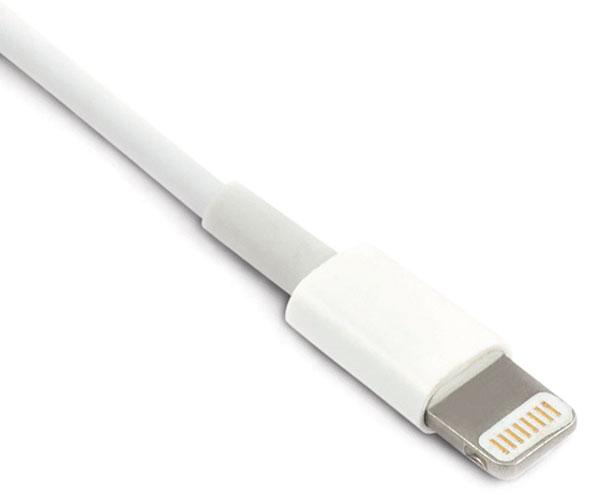
Consider the humble headphone jack. Whether it welcomes a big quarter-inch plug or a mini-plug, it is the nearly universal analog interface for headphones great and small. Apple is trying to change that with an addition to its Made for iPhone spec. Apple-friendly headphones will use the company’s new Lightning connector to receive 48-kilohertz digital stereo input, or 48-kHz mono for headphones with integrated mikes. Lightning headphones dubbed Standard will include a DAC, while those dubbed Advanced will add DSP and features such as active noise cancellation.