Over the years DLNA has emerged as a useful standard enabling a/v products to pull content from router-connected computers, among other uses. Now some new interoperability guidelines will enable it to do the same from cable, satellite, or telco TV set top boxes.
The new standard was developed in conjunction with CableLabs, the research arm of the cable, satellite, and telco TV industries, and uses DTCP-IP link-protected streaming. It effectively means you can stream pay-TV signals throughout the home without having to pay for extra set top boxes, though you will need at least one box using the new technology.
So, you've downloaded a ton of HD movies and TV shows to your iPod or iPhone. Good for you. So now you have a really great picture on a really tiny screen. Not exactly what the developers of HD had in mind, now, is it?DLO is finally selling...
<A HREF="www.dlp.com">Digital Light Projectors (DLPs)</A> are clearly coming into their own this year, based on what we saw at the recent Consumer Electronics Show. Joining Sharp and its groundbreaking XV-Z9000 ($10,000)—and also based on Texas Instrument's 1280 x 720 DLP chip—are the new Sim2 HT300 ($14,995), the DWIN TransVision 2 ($12,999), and the Marantz VP12S1 ($12,499).
Digital Light Processing (DLP) technology has been gaining ground in the home theater market over the last several months, in large part due to the implementation of Texas Instrument's native 16x9 display chip as seen in Sharp's popular XV-Z9000U projector, released late last year.
At the CEDIA Expo, Texas Instruments announced the latest generation of its Digital Micromirror Device (DMD) technology, dubbed DarkChip 4. The company claims even better reproduction of black and dark grays than achieved by its current DarkChip 3...
The merits of “high-end” vs. generic “lamp cord” speaker cable have been, and will be, endlessly debated. I personally have heard differences between speaker cables — there, I said it! Use common sense — $500 worth of cable with a $200 speaker...
In a perfect home-theater world, <I>all</I> consumers would demand ever-better video technologies with which to watch films and other programming at home. We would enthusiastically support companies that brought us video displays of increasing size and resolution, and we would favor movie studios that supported our quest for images and sounds of the highest definition. But the real world could be an unfriendly place for HDTV fans, according to a report just released by the <A HREF="http://www.mcgweb.com">McLaughlin Consulting Group</A>.
Are you a cable or dish person? Apparently, the answer to this question says a lot about how you watch TV. According to a recently released report, cable and satellite operators will need to consider their customers' specific interests and usage behavior in order to thrive in the emerging interactive TV market.
Set-top-box movies just took a big step forward. You thought it was a good deal to get a song for 99 cents? How about watching a movie for 99 cents? VUDU has announced a summer special (but I wonder if it evolves into a new standard pricing...
If you like the effect of Audyssey room correction in your home theater system, would you like to apply it to your headphones? That may happen if headphone makers embrace Audyssey’s ExpertFit Partner Program. Audyssey wants participating manufacturers to create a profile for each model using an ExpertFit measurement program and new algorithms based on existing MultEQ and Dynamic EQ, until now best known for their use in audio/video receivers.
It kind of makes sense. If a rear projection TV works by reflecting an image onto a fixed screen, why can't you put any size screen in front of it? It happened to one man. He had a 50" Sony rear projection set. Shortly after buying it, it...
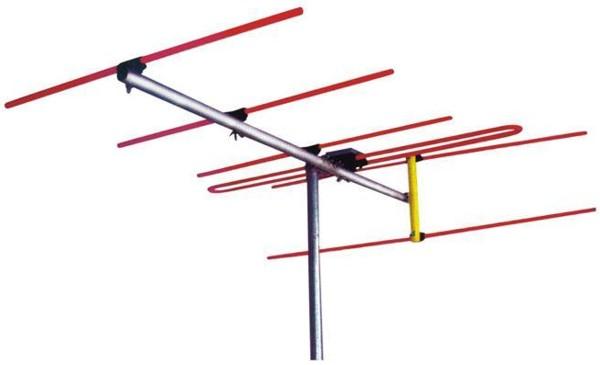
Does free HDTV broadcast over the air still matter? The Consumer Electronics Association contends the answer is no. And it has trotted out a survey to prove its point. Among 1256 adults questioned in December 2010, just eight percent said they get over-the-air HDTV signals. And the number has declined since 2005.
"Using huge swaths of wireless spectrum to deliver TV to homes no longer makes economic sense," said CEA CEO Gary Shapiro. "Congress should pass legislation to allow for incentive auctions so free market dynamics can find the best purposes for underused broadcast spectrum, such as wireless broadband."