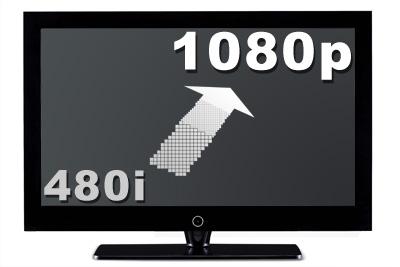
Lately it seems as though every component in a fully tricked-out home theater system wants to dink with the video - the DVD player, the receiver, the TV. Usually whatever is being done is described as some sort of upconversion. What does that mean, though? And perhaps more important, is it always a good thing?
Q. I read somewhere in your magazine that cathode-ray tube TVs have a half-life of 30,000 hours. At 6 hours a day, that's around 13 years. I'm about to make the HDTV plunge. What are the half-life specs for plasma, LCD, and DLP? Jeff Dorscher Glendale, AZ
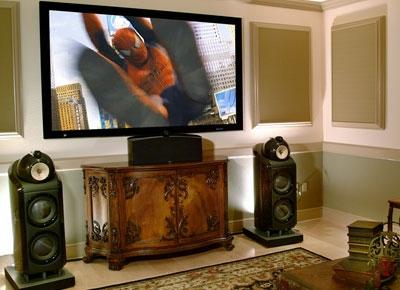
Q. My home theater employs small tower speakers with a matching center speaker below my rear projector, dipole surrounds, and a 12-inch powered subwoofer. I'm building a new family room and would like to move to a flat-panel TV with in-wall or ceiling home theater speakers.
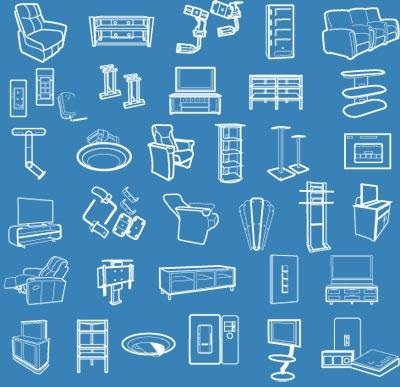
Furniture Why banish your components to a dark, stuffy closet? Furniture makers have a variety of stands and cabinets that will make your gear easy to get to and great to look at.
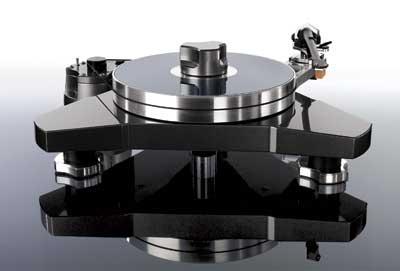
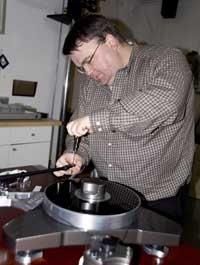
Placement. First, don't locate the turntable on a surface or in a cabinet that also supports loudspeakers, or in the acoustic peak of a room mode, as nothing will screw up your sound more than feeding energy back into the turntable.
Jeff Hoover is the president of Audio Advisors in West Palm Beach, Florida (audioadvisors.com; 561-478-3100) - and everyone thought he was, well, a little crazy when he built the Design Center, a $2 million showcase of rooms outfitted with the latest gear. But Hoover knew better.
Here's some summer reading: Thoughts on Music, by Apple's Steve Jobs (apple.com/hotnews/thoughtsonmusic). It's not a romance novel, or even a juicy tell-all. Instead, his short treatise may change the future of recorded music.