Bookshelf Speaker Reviews

Sort By: Post DateTitle Publish Date
Brent Butterworth  |  Aug 16, 2011

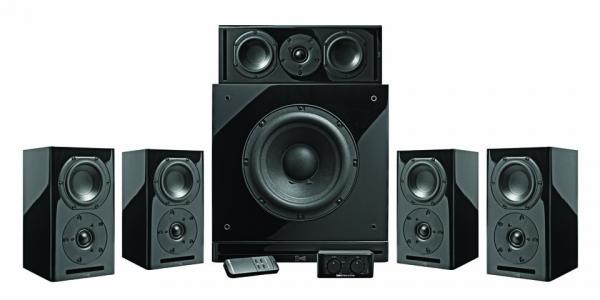
Since time immemorial (or at least the late 1980s), designers of compact subwoofer/satellite speaker systems have struggled against The Hole.

The Hole is the gap between the lowest note the satellites can play and the highest notes the subwoofer can play. The Hole can make voices sound thin, and can rob gunshots and other sound effects of their dynamic impact. But the usual methods for filling The Hole can cause worse problems than The Hole itself.

Daniel Kumin  |  Sep 13, 2011

Yes, you're going to need a bigger desk.

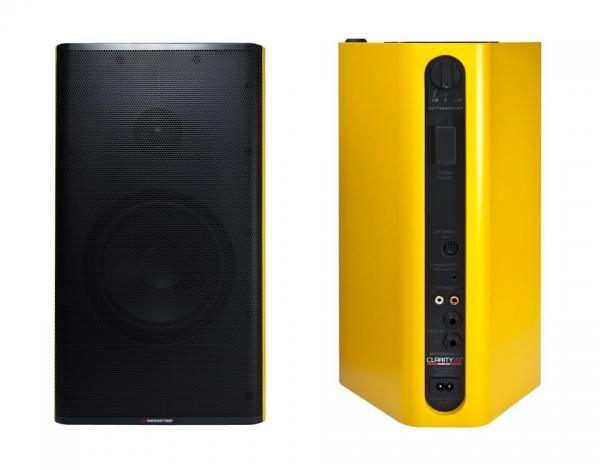
If, that is, you consider the new Clarity HD Multimedia Speakers from MonsterCable (yes, the ex$pensive-wire people) to be "desktop audio." I do – they're flanking my 20-inch monitor as I write this, and while it's true that they rather crowd the work-top, they sound sweet enough in doing so that I'm willing to overlook their bulk.

Daniel Kumin  |  Sep 20, 2011

RSL Speaker Systems is the current manifestation of Rogersound Labs, a SoCal company that goes back a few years — 30 or so, in fact. Like many speaker makers, RSL got its start through garage tinkering, in this case by Howard Rodgers, owner of a well-known retail chain of the same name. (How the “d” got dropped from the company name is a story for another day.)

Despite a long, successful run, the original RSL, again like many other speaker companies, eventually faded away. But after regaining rights to the company name just last year, the firm was reincarnated after a long hiatus by its founder and his family.

Brent Butterworth  |  Oct 16, 2011

Romantics see Italy as a place of rich history and sophisticated culture. Not me. As a non-romantic, I can think of Italy only as the birthplace of the Fiat 128 that often left me walking instead of driving, and the location of a honeymoon in which I fought frenzied traffic and struggled to find a decent meal.

Brent Butterworth  |  Dec 22, 2011

It’s been a dream of audio engineers and enthusiasts for decades: Create a compact speaker system that performs like a big one.

Brent Butterworth  |  Dec 26, 2011

Emotiva made its name by offering high-end audio electronics that look like they cost thousands but actually cost hundreds. With the X-Ref line, it’s trying to do the same in speakers. The company has offered speakers in the past, but X-Ref is its first concerted effort to deliver a broad line of speakers at prices low enough to attract budget-minded-yet -serious home theater enthusiasts. The line includes two tower speakers, two LCR (left/center/right) speakers, two bookshelf speakers, one surround speaker, and two subwoofers.

Brent Butterworth  |  Mar 21, 2012

It seemed that audio companies had surrendered the home-theater-in-a-box concept to the TV manufacturers.

Brent Butterworth  |  May 09, 2012

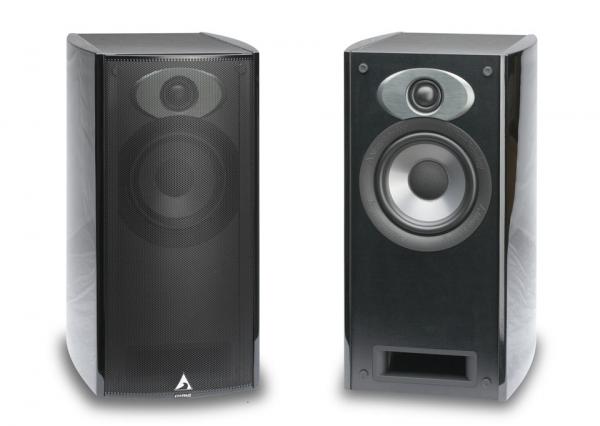
If there’s any speaker spec that’s routinely bogus, it’s bass response. You see a lot of little speakers rated to deliver bass below 40 Hz, but that measurement is almost always taken at -10 dB, instead of the industry standard of -3 dB. Even if the little speaker does hit, say, 36 Hz at some level, it almost certainly can’t deliver any usable volume at that frequency.

There are ways, though, to get legit sub-40 Hz response from a little speaker. One is H-PAS, or Hybrid Pressure Acceleration System, invented by Solus-Clements and now used and licensed by Atlantic Technology.

Brent Butterworth  |  Aug 23, 2012

When the economy tanked in 2007, a funny thing happened in high-end audio: Many manufacturers prospered by creating even higher-priced products. As a speaker reviewer, I lack the economics chops to explain this turn of events, but I can tell you it has spawned some fascinating audio gear.

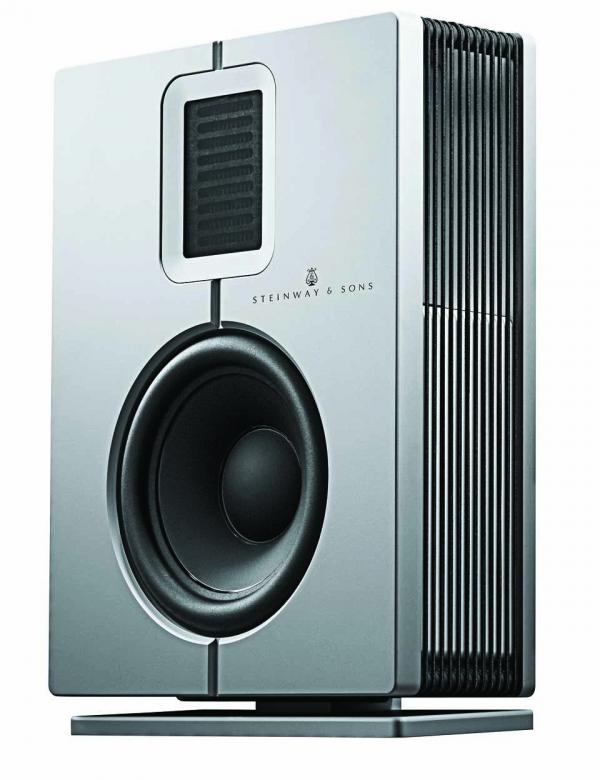
Take, for example, Steinway Lyngdorf ’s S-Series, built to be the Bugatti Veyron of compact home theater systems.

Brent Butterworth  |  Aug 23, 2012

When I’m looking for speakers to review, I gravitate toward two types: ones that have the potential to sound great, and ones with weird designs. The former offer the potential for hours of joyous listening. The latter offer the potential for either a previously unimagined sonic nirvana or an audio train wreck, both of which are fun to write about.

Definitive Technology’s $899-per-pair StudioMonitor SM65 fits both descriptions.

Brent Butterworth  |  Sep 18, 2012

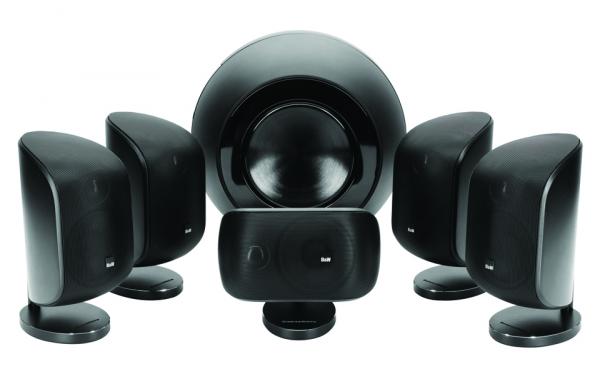
As athletes such as Michael Vick, Kobe Bryant, and the whole New Orleans Saints defense have learned the hard way, even when you’re the best, it helps to be friendly. Big surround sound systems aren’t friendly to your décor or your pocketbook. Fortunately, in the last 2 years, we’ve seen major speaker companies put serious effort into designing compact 5.1 systems that deliver no-compromise performance. The Mini Theatre line from Bowers & Wilkins is the latest to make its way through my listening room.

Brent Butterworth  |  Oct 11, 2012

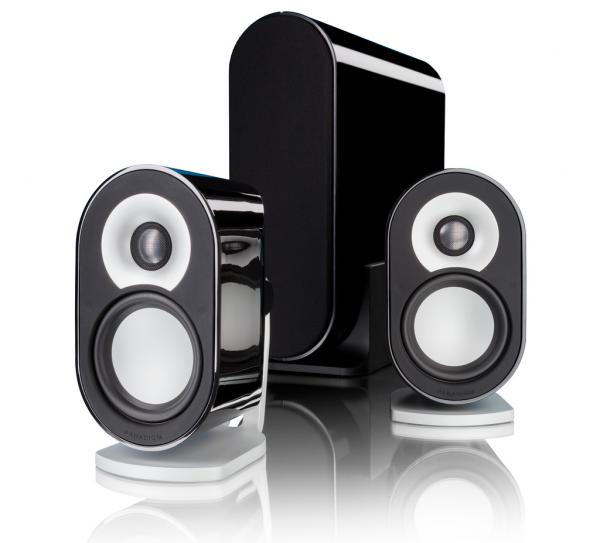
The surest way to future success is to repeat your past successes. Like that line? I made it up. If you think it’s a lot of B.S., I present as irrefutable evidence the careers of Andy Warhol and Roy Lichtenstein. Also the Paradigm Millenia CT, a 2.1 speaker system based closely on the MilleniaOne, our 2011 Product of the Year.

Daniel Kumin  |  Oct 16, 2012

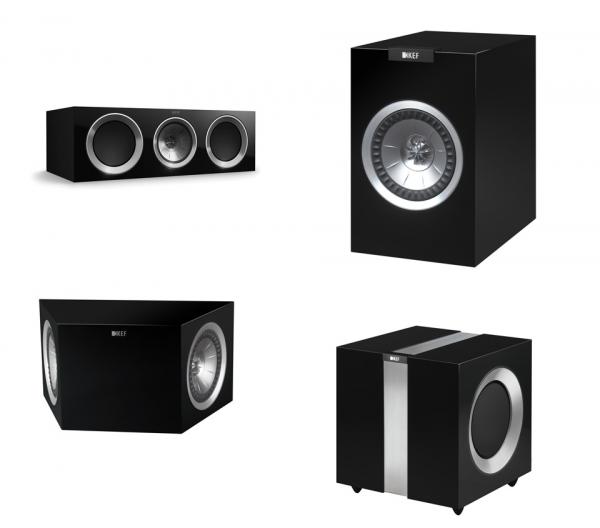
Like so many British (and, for that matter, American) ür-audio brands, KEF — originally Kent Engineering & Foundry — had its roots in the post- WWII technology boom. In KEF’s case, it grew inside a Quonset hut on the grounds of the aforementioned foundry. A half-century down the road the Kentish maker is still there (in Kent, not in the metal shed!), still focused on its core competency (loudspeakers), and still producing wholly excellent designs.

Brent Butterworth  |  Dec 20, 2012

KEF made the LS50 minispeaker for lots of reasons. It’s a celebration of the company’s 50th anniversary. It’s the first affordable application of the technology developed for the $29,999/pair Blade. It’s a throwback to the LS3/5a, a beloved, BBC-designed minimonitor for which KEF made the drivers.

Daniel Kumin  |  Feb 13, 2013

Everybody loves small speakers, and why not? Smaller is — often — easier to afford, easier to schlep home, easier to place, and easier to live with. Smaller also has certain acoustical advantages in achieving smooth response and in yielding the broad, even spread of sound that favors good imaging and an open, believable tone color.

But how small is too small? Some say there’s no limit, and at least one manufacturer (Bose) has had success with subwoofer/satellite designs whose sats are smaller than a pepper mill, let alone a breadbox. But as the front satellites of a speaker system become smaller, their ability to reproduce bass low enough to bridge effectively with the practical upper limits of a single subwoofer, at around 150 Hz (and ideally lower), becomes questionable.

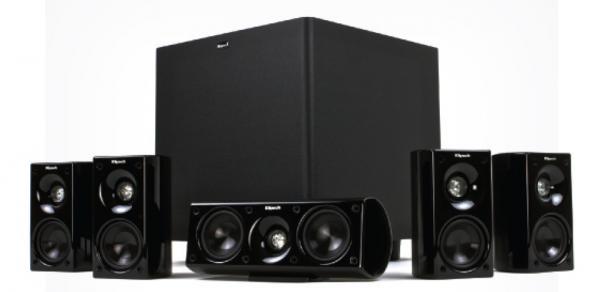
Klipsch thinks it has found the sweet spot with its HD Theater 600 system

Pages

X