Reception-wise, the transition to digital television will create winners and losers. Some areas will get stronger signals, while others will get weaker ones. And the latter will be subject to the "cliff effect"--the picture doesn't degrade, it shuts down altogether. On Friday the Federal Communications Commission updated its lists of projected losers.
Television broadcasters could soon legally own and operate multiple stations within one market, under regulations being considered by the <A HREF="http://www.fcc.gov/">Federal Communications Commission</A>. At present, FCC rules allow only one station per owner per market (a market being defined as a geographical area within transmitter range). The proposed changes were submitted for review by the FCC's Mass Media Bureau to the commissioners on Monday, July 19.
The <A HREF="http://www.fcc.gov/">Federal Communications Commission</A> has begun looking into problems presented by the proliferation of digital cable systems, problems that could offer pirates the opportunity to make an infinite number of perfect copies of high-definition movies from transmissions over pay-per-view channels like Showtime and Home Box Office. The lack of a reliable copyright-protection technology is hindering the rollout of high-definition television.
Rupert Murdoch may get another shot at DirecTV. On October 9, the News Corp. CEO won a second chance to acquire the direct broadcast satellite operation from General Motors' Hughes Electronics division when the Federal Communications Commission (FCC) declined to approve a proposed $13 billion acquisition of DirecTV by Littleton, CO–based EchoStar Communications.
Barry Willis | Dec 20, 2003 | First Published: Dec 21, 2003
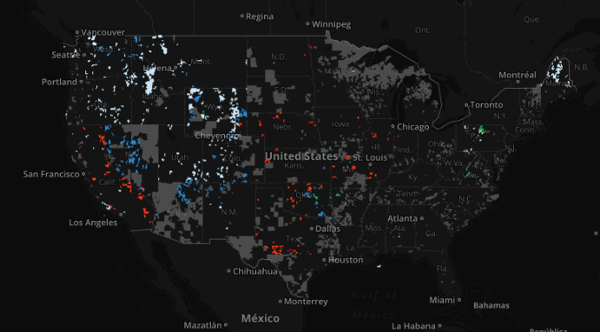
News Corporation is about to become the biggest player on the television playing field, thanks to a December 19 approval by the Federal Communications Commission (FCC) of its proposed $6.6 billion acquisition of satellite broadcaster DirecTV. The deal would give News Corp. a 34% controlling interest in DirecTV parent company Hughes Electronics. DirecTV has more than 11 million subscribers.
New broadband offerings, including high-speed Internet access and video-on-demand, may be coming soon, thanks to an April 18 decision by the <A HREF="http://www.fcc.gov">Federal Communications Commission</A> (FCC).
Last week the Federal Communications Commission (FCC) announced a $20 billion, 10-year plan to bring gigabit-speed broadband networks to unserved rural areas of America.
The new management at the Federal Communications Commission isn't taking the CableCARD snafu lying down. They want to make new rules to foster card adoption--and they've also got ideas on what the card's successor may look like.
Electronics manufacturers and retailers have jointly asked the Federal Communications Commission (FCC) to push forward its deadline for inclusion of digital tuners in TV sets larger than 25" diagonally.
Following a long and contentious debate, the Federal Communications Commission has OKed the merger of the Sirius and XM satellite radio networks. The immediate effect of this controversial move will be a monopoly in consumer satellite radio service. However, the two money-losing companies have long said that only a merger would allow them to cut costs, make money, and survive in the longterm.
The Federal Communications Commission (FCC) is seeking comment on a proposal announced last year that would allow TV broadcasters to use the “next generation” ATSC 3.0 transmission standard on a voluntary, market-driven basis.
Back in 1996, when Congress set the timetable for digital television, one of the provisions left open for later discussion was fees the <A HREF="http://www.fcc.gov/">Federal Communications Commission</A> (FCC) would levy on broadcasters who charged for new pay-TV programming. The deadline for converting to DTV was set to be the year 2006, but how much should the government be compensated for special content such as HDTV movies, stock quotes, or other fee-based services that a broadcaster might charge for?
Though it seems that every big box electronics retailer from Malibu to Manhattan is wall-papered in consumer advisories about the digital TV switch in 2009, those stores aren't playing by the rules when it comes to educating the masses - the FCC's...
Shame on you, RadioShack. And you too, HH Gregg, FYE, Fred Meyer Stores, Ultimate Electronics, and Boscov's. You've been selling analog televisions without adequately warning consumers that these sets are about to become obsolete with the end of analog broadcasting on February 17, 2009. That's why the Federal Communications Commission has just slapped you with $96,000 in fines. Not much, admittedly, but it's a start.